CCRHR brings together an interdisciplinary research community reimagining human rights through critical, creative and collaborative approaches.
Directors

Prof David Herd
School of English
▸ Click for bio
David Herd is a poet, critic and co-organiser of the project Refugee Tales. His work is at the intersection of literature and human rights. He has published widely on the politics of human movement and on modern and contemporary poetry and poetics and has held visiting fellowships at George Mason University, Simon Fraser University and the Writing Center Gloucester, MA.
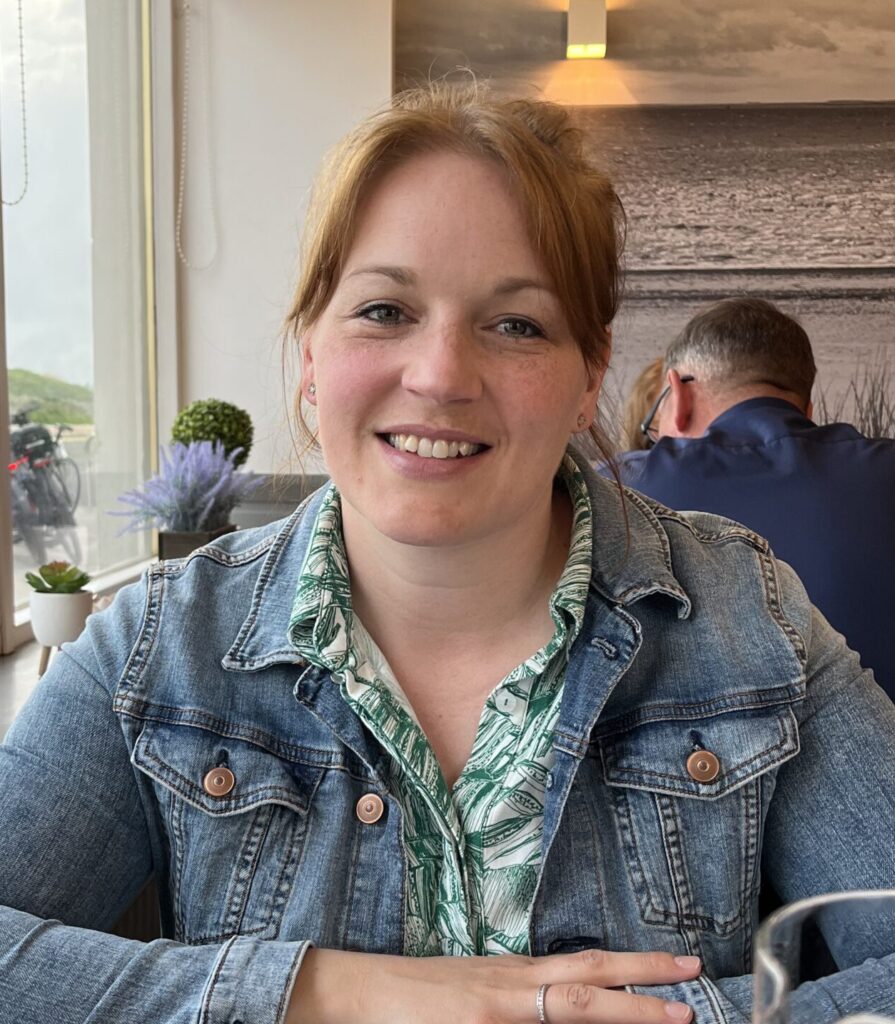
Dr Natasha Saunders
School of International Relations
▸ Click for bio
Based in the School of International Relations, Dr Natasha Saunders is a political theorist working on forced migration. Her work has examined resistance/activist movements by refugees and asylum seekers, and the historical development, and politics, of ‘the refugee problem’. Her current research focuses on digitised border controls and the ethical and human rights challenges that they pose.
Affiliated Researchers
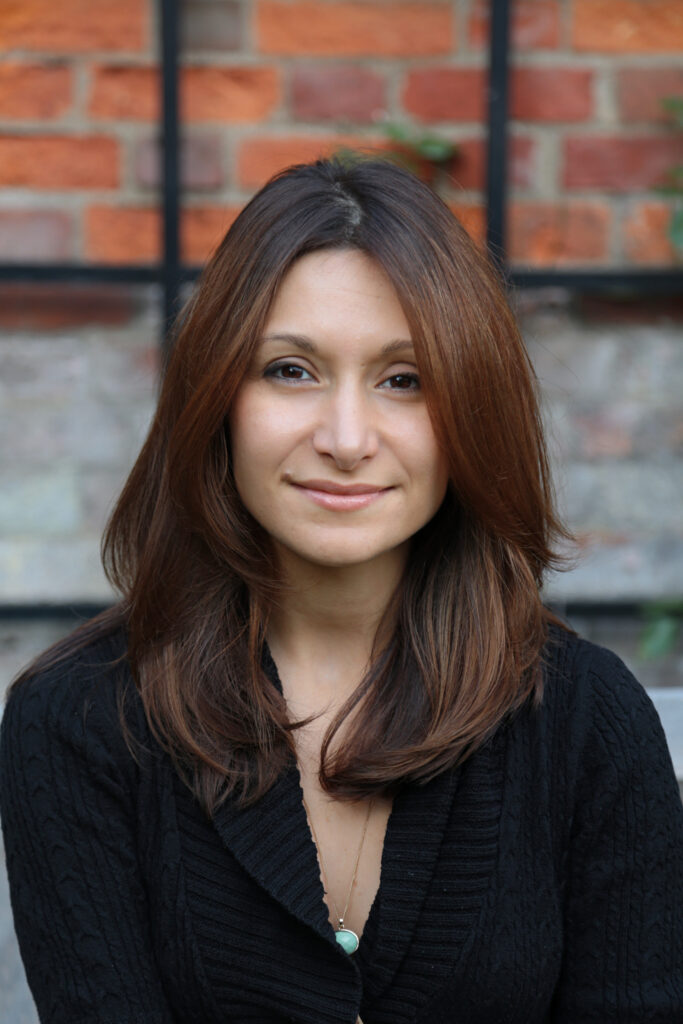
Dina Nayeri
School of English
▸ Click for bio
Dina Nayeri’s critically acclaimed books, essays, and stories are published in 20+ countries and taught in schools across Europe and the US. Who Gets Believed? (2023) was a finalist for the National Book Critics Circle award and the Dayton Literary Peace Prize. In reviewing it, The Guardian called her “a master storyteller of the refugee experience.” The Ungrateful Refugee (2019) was a finalist for the Kirkus Prize, Los Angeles Times Book Prize, and won Germany’s Geschwister Scholl Preis. The Observer called it “a work of astonishing, insistent importance.” A fellow at the Columbia Institute for Ideas and Imagination in Paris and winner of a National Endowment for the Arts literature grant and the UNESCO City of Literature Paul Engle Prize, Dina’s essays and stories have been published in The New York Times, The New Yorker, The Guardian, Granta, Best American Short Stories, O. Henry Prize Stories, and many other publications. She is a graduate of the Iowa Writers Workshop, Harvard Business School, and Princeton and is now a Reader at the University of St Andrews.

Prof Anthony F. Lang Jr
School of International Relations
▸ Click for bio
Anthony F Lang, Jr (Tony) is a Professor of International Political Theory in the School of International Relations at the University of St Andrews. He was an assistant professor of political science at the American University in Cairo, Egypt from 1996-2000. From 2000-2003, he served as a programme officer at the Carnegie Council for Ethics in International Affairs. Prior to arriving in St Andrews in 2004, he taught courses at Yale University, Bard College and Albright College. He is currently the editor of the Journal of International Political Theory and was one of the founding editors of Global Constitutionalism and serves on the editorial boards of Ethics & International Affairs and Human Rights Review. He created the Centre for Global Constitutionalism (now the Centre for Law and Global Governance) at the University of St Andrews. He has served as a consultant to the UNODC on ethics in higher education and the UK Ministry of Defence on the legal and ethical use of force. He has published three single authored books and edited or co-edited ten others and published numerous articles and book chapters. His scholarship sits at the intersection of politics, law and ethics at the global level. He has written about global constitutionalism, universal values, the just war tradition, political responsibility, international law, Middle East politics, and human rights.
Prof Nicki Hitchcott
School of Modern Languages
▸ Click for bio
Nicki Hitchcott is Professor of French and African Studies in the School of Modern Languages. She is a specialist in postcolonial literatures in French and English, particularly fiction from sub-Saharan Africa. Funded by the AHRC, the British Academy, the Leverhulme Trust and the RSE, her research has focused on West African women’s writing, migrant fiction, cultural responses to the 1994 Genocide against the Tutsi in Rwanda, Belgian colonialism, and ecotexts. She published 3 single-authored monographs, a further 9 co-authored/co-edited volumes, and over 40 peer-reviewed articles and chapters. She is currently working with Alice Karekezi (University of Rwanda) and John McInally (St Andrews) on the stories of Métis children abducted from the former Belgian empire in Africa.
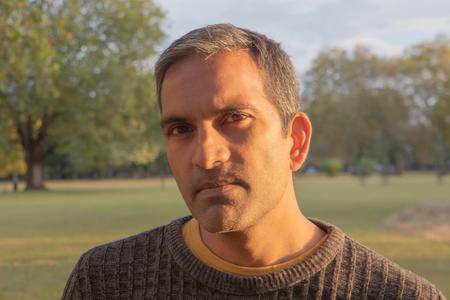
Dr Rahul Rao
School of International Relations
▸ Click for bio
Rahul Rao is Reader in International Political Thought in the School of International Relations at the University of St Andrews. He has research interests in postcolonial and queer theory and the politics of South Asia and is embarking on a new project that engages with the more-than-human turn in the humanities and social sciences. He is the author of three books: The Psychic Lives of Statues: Reckoning with the Rubble of Empire (Pluto Press, 2025), Out of Time: The Queer Politics of Postcoloniality (OUP, 2020), and Third World Protest: Between Home and the World (OUP, 2010). He is a member of the Radical Philosophy editorial collective.

Dr Anindya Raychaudhuri
School of English
▸ Click for bio
Anindya Raychaudhuri is Senior Lecturer in English at the University of St Andrews, Scotland, UK. He is the author of two monographs, Homemaking: Radical Nostalgia and the Construction of a South Asian Diaspora (Rowman & Littlefield, 2018) and Narrating South Asian Partition: Oral History, Literature, Cinema (Oxford University Press, 2019). In 2016, he was named one of the BBC/AHRC New Generation Thinkers. His research interests include critical theory and Marxism, postcolonial studies, memory studies and medical humanities. His latest monograph, A Cultural History of Vertigo: Unbalanced will be published by Bloomsbury in December 2025. He also has interests in Equality, Diversity and Inclusion and, since 2023, has been the EDI Lead for the Scottish Graduate School for Arts & Humanities.

Dr Lorna Burns
School of Modern Languages
▸ Click for bio
Lorna Burns is Senior Lecturer in Postcolonial Literatures in the School of English at the University of St Andrews. Her research interests lie in postcolonial literatures and theory, contemporary world literatures, and continental philosophy, focusing, in particular, on the points of intersection between literature and philosophy, especially that of Gilles Deleuze and Félix Guattari, Bruno Latour, and Jacques Rancière. She is the author of Postcolonialism After World Literature: Relation, Equality, Dissent (Bloomsbury 2019), Contemporary Caribbean Writing and Deleuze: Literature Between Postcolonialism and Post-continental Philosophy (Continuum, 2012), and the forthcoming Engagements with Postcolonial Literature and Theory (Routledge).

Dr Bradley Hillier-Smith
School of Philosophical, Anthropological and Film Studies
▸ Click for bio
Bradley Hillier-Smith is Associate Lecturer in Moral, Legal, and Political Philosophy at the University of St Andrews. His research specialises in global justice and human rights, particularly migration ethics and obligations towards refugees. He is the author of The Ethics of State Responses to Refugees (Routledge 2024). Bradley is also a charity worker and political campaigner advocating for the rights and settlement of refugee in the UK.

Prof Mario I Aguilar
School of Divinity
▸ Click for bio
Mario I Aguilar is Professor of Religion and Politics, and Director of the Centre for the Study of Religion and Politics (CSRP) at the University of St. Andrews. He is also Collaborator at the Human Rights Observatory of the UK (sub-group on faith), and biographer of both, Pope Francis and Pope Leo XIV. His latest work is Nadia Murad: Yazidi and Global Peacemaker (Routledge, 2026).

Dr Peter Mackay
School of English
▸ Click for bio
Peter Mackay is a Senior Lecturer in Literature in the School of English with an interest in Scottish and Irish literature and translation. In 2024 he was named Scottish Makar.

Dr Sam Haddow
School of English
▸ Click for bio
Sam Haddow is a Senior Lecturer at the University of St Andrews. His research includes literatures of grief and mourning, cultural discourses around spectacle and violence, storytelling performance and end-of-the-world fiction. He is the author of Precarious Spectatorship: Theatre and Image in an Age of Emergencies (Manchester University Press 2019), We All Die At The End: Storytelling in the Climate Apocalypse (Manchester University Press 2025) and editor of the forthcoming volume The End of the World in British Literature and Culture (Cambridge University Press 2026). His current projects include an edited collection on the work of John Wyndham and several outputs exploring childhood in our age of extinction.

Prof Gill Plain
School of English
▸ Click for bio
Gill Plain is Professor of English Literature and Popular Culture in the School of English. Her research centres on British literature, cinema and culture of the mid-twentieth century, in particular responses to the Second World War. She also works on crime fiction, feminist theory and gender studies. Her publications include Twentieth-Century Crime Fiction: Gender, Sexuality and the Body (2001), John Mills and British Cinema: Masculinity, Identity and Nation (2006) and Literature of the 1940s: War, Postwar and ‘Peace’ (2013). Her most recent books are Prosthetic Agency: Literature, Culture and Masculinity in the Aftermath of World War II (2023) and Agatha Christie: A Very Short Introduction (2025).
Prof Ziad Elmarsafy
School of Modern Languages
▸ Click for bio
Ziad Elmarsafy teaches Arabic and Comparative Literature at St Andrews. His current research revolves around two foci: the problem of racism within the Arab-majority societies of the Middle East and North Africa (MENA) region, and the links between racism, migration, and modern slavery in the contemporary global context.

Dr Camilo Ardila
School of International Relations
▸ Click for bio
Dr Camilo Ardila is an Associate Lecturer in the School of IR. His current research focuses on the intersection of decolonial studies, political reconciliation, and democratic theory. Camilo’s work has been published in Millennium: Journal of International Studies, Res Publica, the Journal of Moral Philosophy, Cuestiones de Filosofia, and Dialogos de Saberes. Before joining the University of St Andrews, Camile held different teaching positions at the University of Edinburgh and the University of Dundee, in the United Kingdom, as well as at Universidad Santo Tomas and Universidad Libre in Colombia.